
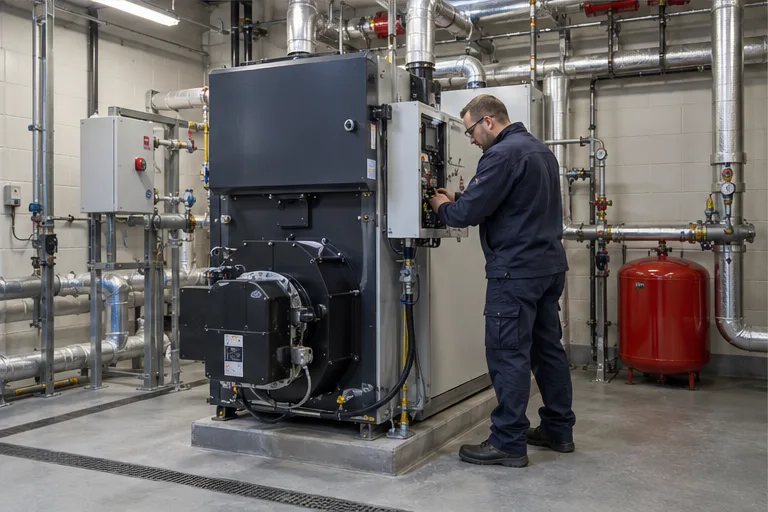
Describe What Has Stopped Working
State whether the fault affects all heating, domestic hot water or one part of a multi-boiler installation. Record any displayed fault indication without removing covers, altering controls or attempting gas work.
A useful description gives the sequence of events. Explain when the problem began, whether it has recurred and what has already been inspected. Include the recorded fault indication in your enquiry so it can be considered alongside the appliance details.
For routine maintenance when the equipment is operating, see the boiler servicing page.
Diagnosis Before Parts or Replacement
The assessment needs to distinguish the boiler fault from a problem in the supply, controls or wider heating system. Include the appliance make and model, the number of connected boilers and any recent work on the plant.
Describe any assessment already carried out, including the recorded findings and the work proposed by an attending contractor. Identify the person who can discuss the installation.
When a Wider Decision Is Needed
A qualified assessment can identify faults and the maintenance needed to manage associated risks. Make existing findings available and describe the operating issues recorded by the people managing the building. Include any recommendations already made by an attending contractor.
Keep Safety Systems in Service
Do not interfere with safety controls. Gas work must be carried out by an appropriately qualified Gas Safe registered engineer.
If you suspect a gas escape, contact the Northern Ireland gas emergency service immediately and follow the site’s emergency arrangements.
Before commissioning work, check the engineer’s Gas Safe registration and relevant gas and appliance qualifications. HSENI’s commercial catering gas safety guidance (hseni.gov.uk) explains why the category of work matters.
Access and Continuity for the Building
Tell us when the premises are occupied and what heating or hot water remains available. A site with several boilers may have a different continuity plan from a building dependent on a single appliance.
Give the plant room access arrangements, the name of the site contact and any restrictions already established by the people managing the fault. State who can authorise work and arrange access to related controls or services.
Our plant room information covers connected equipment and coordination where the issue extends beyond one boiler.
From a Symptom to a Recorded Finding
Follow the appliance manufacturer’s instructions. Discuss the appliance and connected equipment within the assessment scope. A repair brief should therefore identify the recorded symptom and any investigation already completed, rather than request a component change without an assessment.
For a fault that has returned after previous work, keep the earlier findings available for comparison. This gives the attending qualified person the history needed to assess the present condition. It also provides the building manager with a record of the work authorised and completed.
Records After the Repair
As good practice, ask for a handover record of the fault found, work completed and the equipment’s operating status. Keeping it with the building’s maintenance information can help when discussing recurring problems.
If further work is recommended, distinguish it from the repair already authorised. A clear record helps the facilities manager decide what should be scheduled next and which plant remains available.
Send the Fault Details
Discuss the recorded fault and the assessment needed to establish the repair scope with Commercial Gas Belfast.
Use the boiler repair enquiry to describe the current problem.