
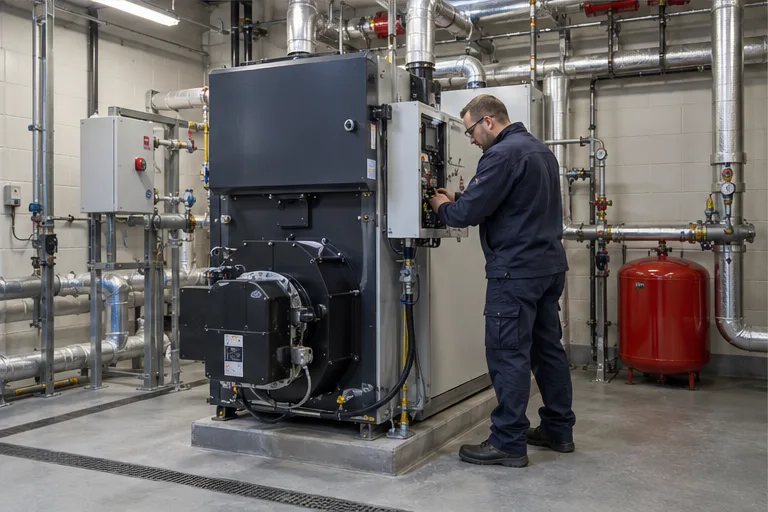
Define the Appliances and the Visit
List the boilers included in the proposed service, their make and model where known, and the fuel they use. A multi-boiler installation needs each appliance identified, alongside any shared controls or system equipment included in the work.
Explain whether the visit concerns routine maintenance, a reported operating issue or a return to plant that has been out of use. This helps distinguish servicing from fault diagnosis and a repair scope.
If the boiler has stopped working, use the commercial boiler repair page to prepare an account of the fault.
What Should the Servicing Scope Cover?
The manufacturer’s instructions and the installation determine the checks and maintenance required. Discuss the appliance, its combustion and safety controls, the flue and ventilation arrangement, and the documentation expected after the visit.
Agree which tasks apply to the boiler itself and which involve the wider heating system. Ask the contractor to identify which appliances and associated system components are included in the proposed service.
- Identify the appliances and associated components included in the visit.
- Make the manufacturer information and previous service records available.
- Describe known faults or changes since the last service.
- Agree access, shutdown arrangements and a building contact.
- Confirm what findings and records will be provided at handover.
Plan Around an Occupied Building
A school, healthcare building or office may need heating and hot water during normal occupancy. Establish the permitted shutdown window and whether other working plant can maintain the required services.
Let the site contact coordinate keys, permits and access to any areas outside the plant room that the work involves. The person commissioning the service should also know who can authorise additional work if a defect is found.
Separate Immediate Defects From Planned Work
As good practice, ask for findings that distinguish immediate safety issues from recommendations for later maintenance. Ask for a service record explaining the equipment’s status to the building manager.
Servicing the Appliance and Its Safety Controls
The appliance’s burner, combustion checks, safety controls and flue arrangements belong in the relevant manufacturer’s servicing instructions. That makes the make and model useful for more than identifying a replacement part. It identifies the procedure against which the proposed maintenance should be assessed.
As good practice, ask for a record distinguishing what was inspected from what was adjusted, repaired or left for further work. Discuss the findings and equipment status at handover, together with any items outside the agreed visit scope.
Competence for Commercial Gas Appliances
Check Gas Safe registration and the engineer’s relevant qualifications before gas work is commissioned. The gas type and commercial appliance category matter, rather than registration being treated as universal competence.
HSENI’s commercial catering gas safety guidance (hseni.gov.uk) explains this qualification check. Ask for the registration and competence information relevant to the work.
Servicing intervals should follow the manufacturer’s instructions and the site’s maintenance requirements. Do not assume that one interval or one certificate description applies to every commercial installation.
Keep the Plant Room Context
A boiler service can identify an appliance issue without resolving a problem elsewhere in the installation. Provide information about repeated loss of heat, uneven distribution or controls changes if those are part of the enquiry.
The plant room work page covers the connected system and the information useful for a broader survey.
Arrange a Servicing Discussion
Discuss the maintenance scope for your boilers with Commercial Gas Belfast. Explain any occupancy restrictions and the records required by the person managing the estate.
Use the servicing enquiry form to describe the work. If some details are unavailable, identify who can supply them during the follow-up discussion.